
How Rats Get Into Melbourne Roofs: Real Entry Points From Our Jobs
Hearing scratching in the ceiling at night? In most Melbourne homes we inspect, rats are getting into the roof through a gap you can’t see from the ground. Every photo in this guide was taken by our technicians on real rat jobs around Melbourne. It shows what we find in the roof void, the signs that a gap is being used, the most common entry points, and how we block them for good.
What we find in the roof void
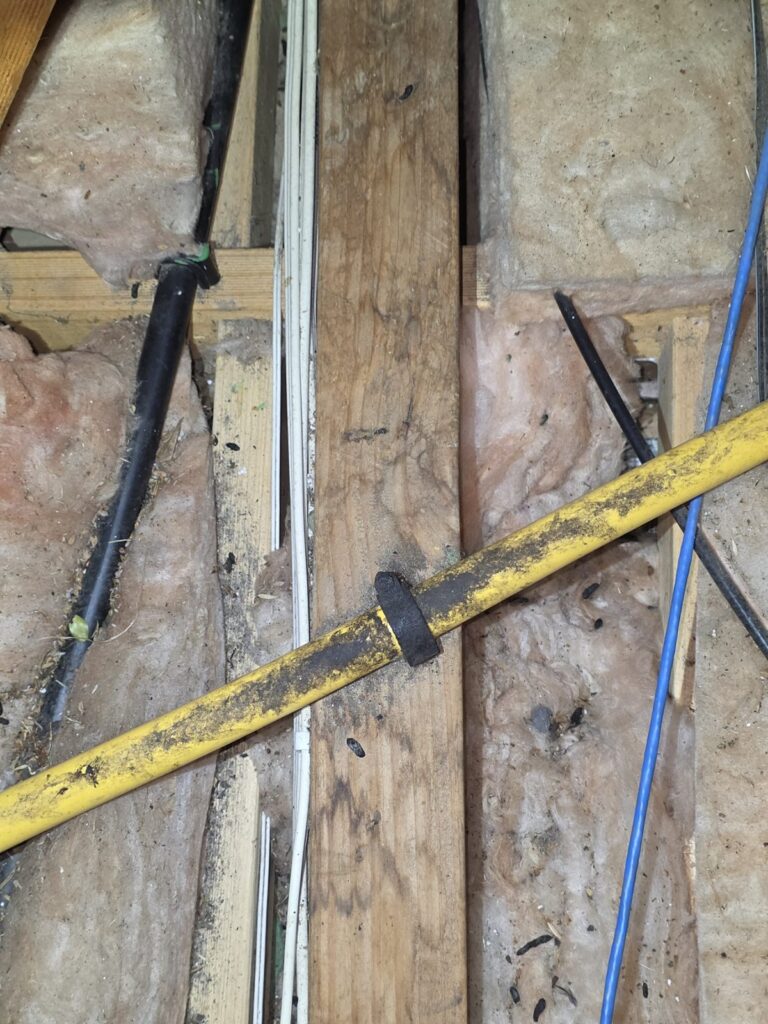
Before we go up on the roof, we check inside. Rats leave a clear trail: droppings along the timbers, pipes and cables they run on, and dark greasy marks where their bodies rub against the same spots night after night.

Rat droppings along the timber and dark rub marks on the gas pipe. Rats use pipes as runways, and the grease from their fur leaves a stain.
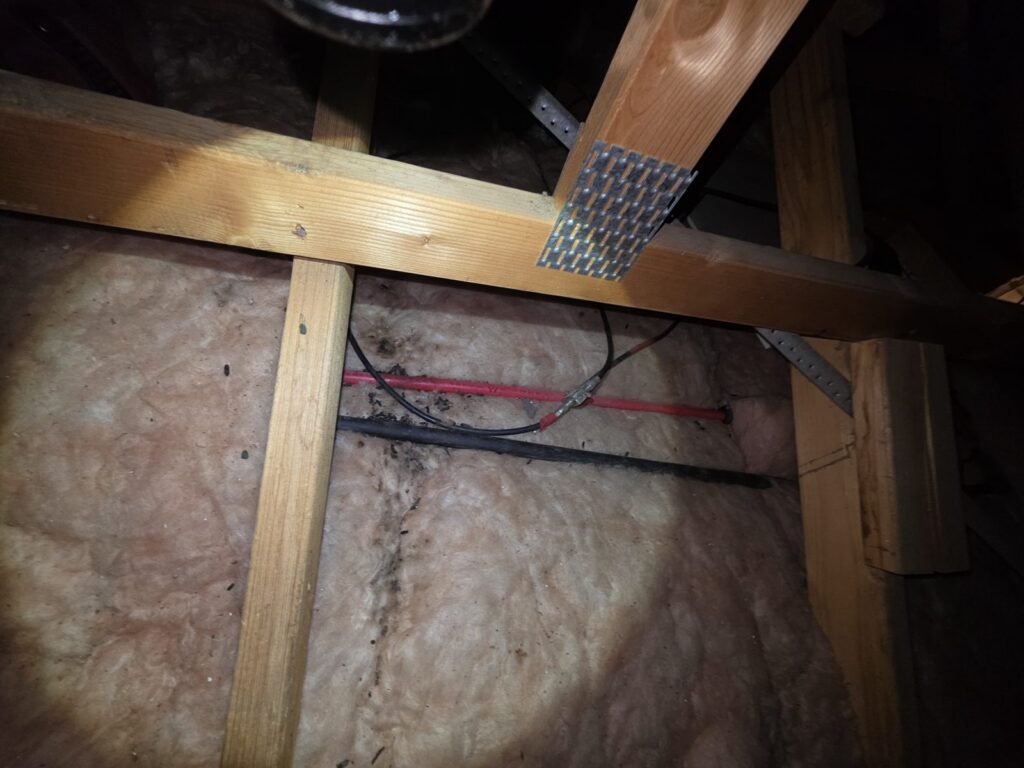
Droppings in a line along the pipes and cables. Rats follow the same routes every night, so the droppings show you their runway.
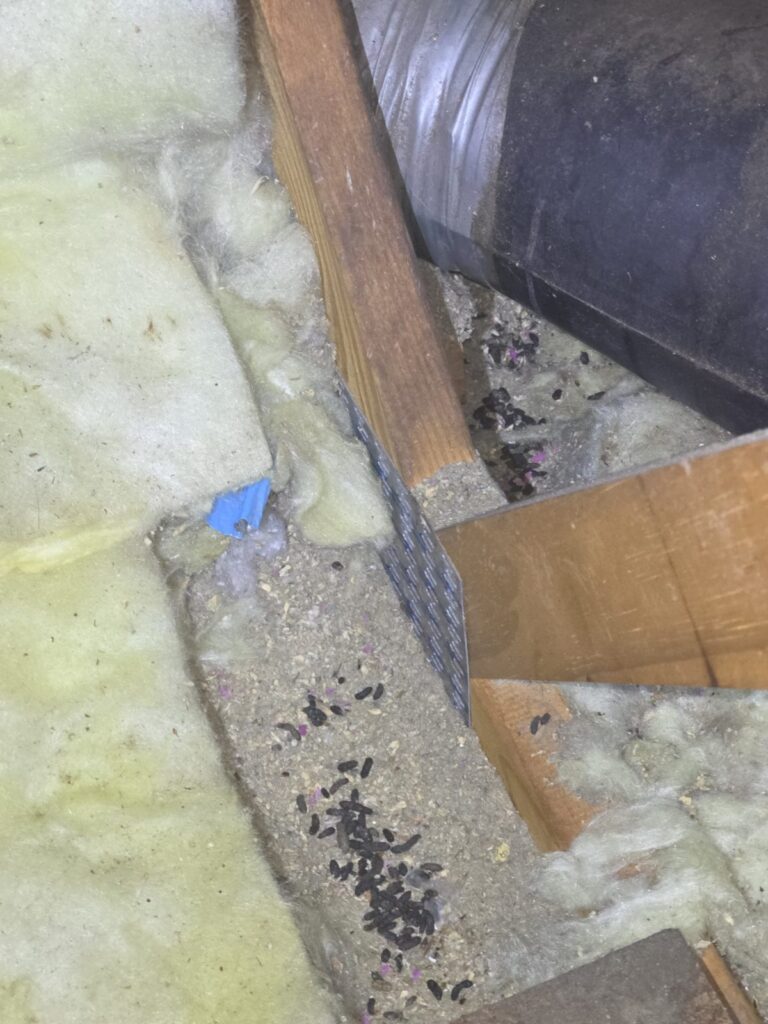
Rat droppings along the timbers in a Melbourne roof void (5 November job): much bigger and thicker than mouse droppings.
Not sure if it’s rats or mice? Rat droppings are much bigger, about 12 to 18 mm long. Our droppings guide has a size chart.
Signs a rat is using a gap
From outside, an active entry point usually has something left at the opening: droppings, nest material or a build-up of debris that rats have dragged in or pushed out.
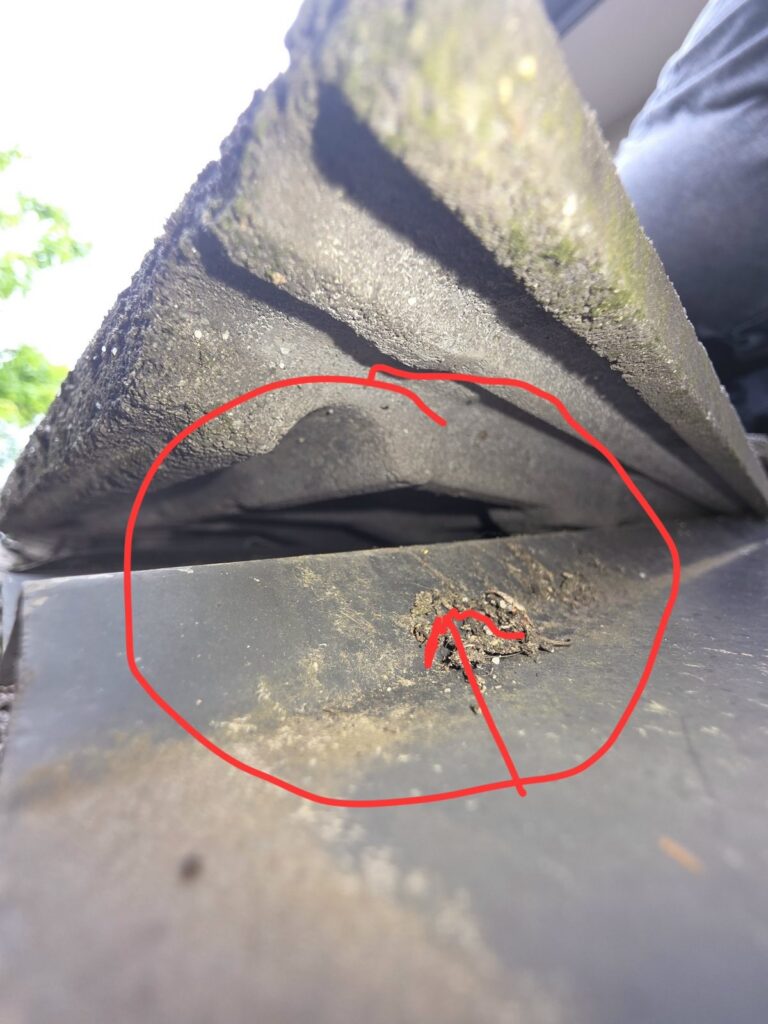
Droppings and nest material right at the mouth of the gap.
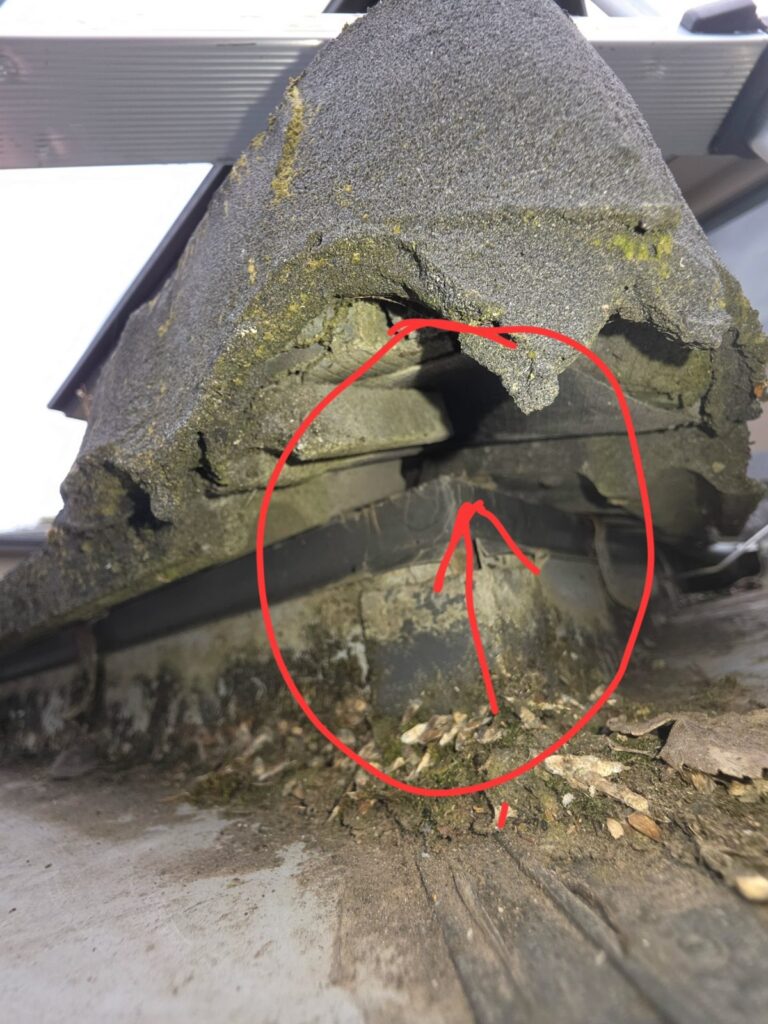
An open ridge cap end with debris piled at the entry.
Gnaw marks are another giveaway. Rats chew timber, fascias and bedding to widen a gap, leaving fresh, pale wood and rough edges.
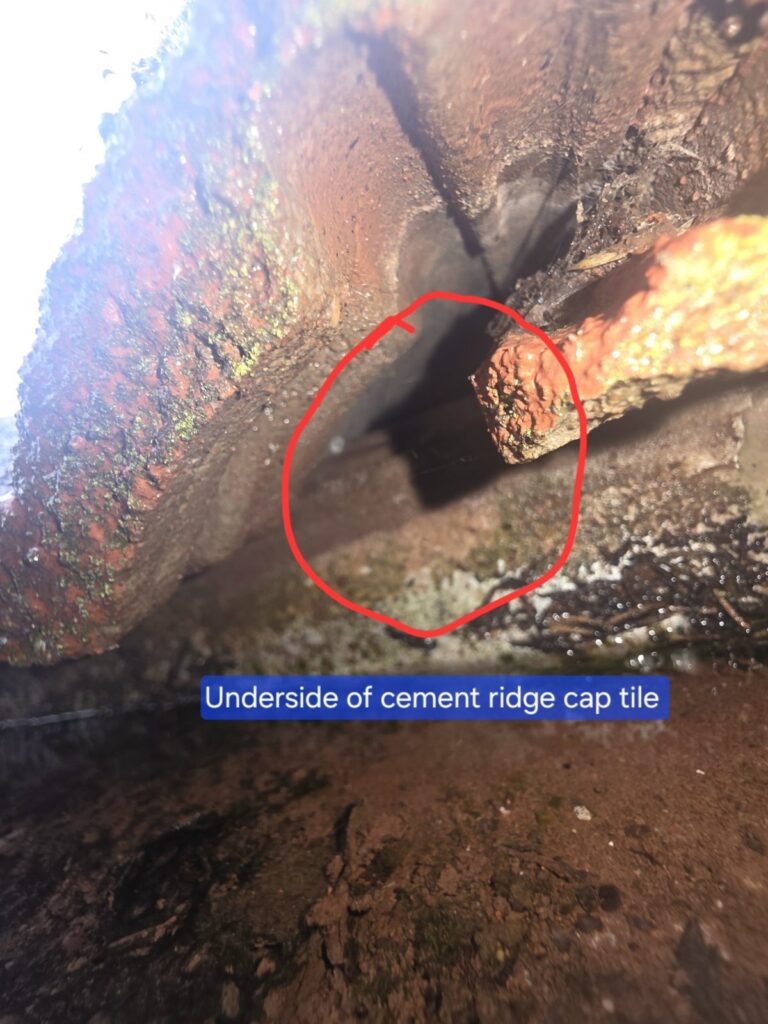
Fresh gnaw marks where a rat has chewed to widen its way in.
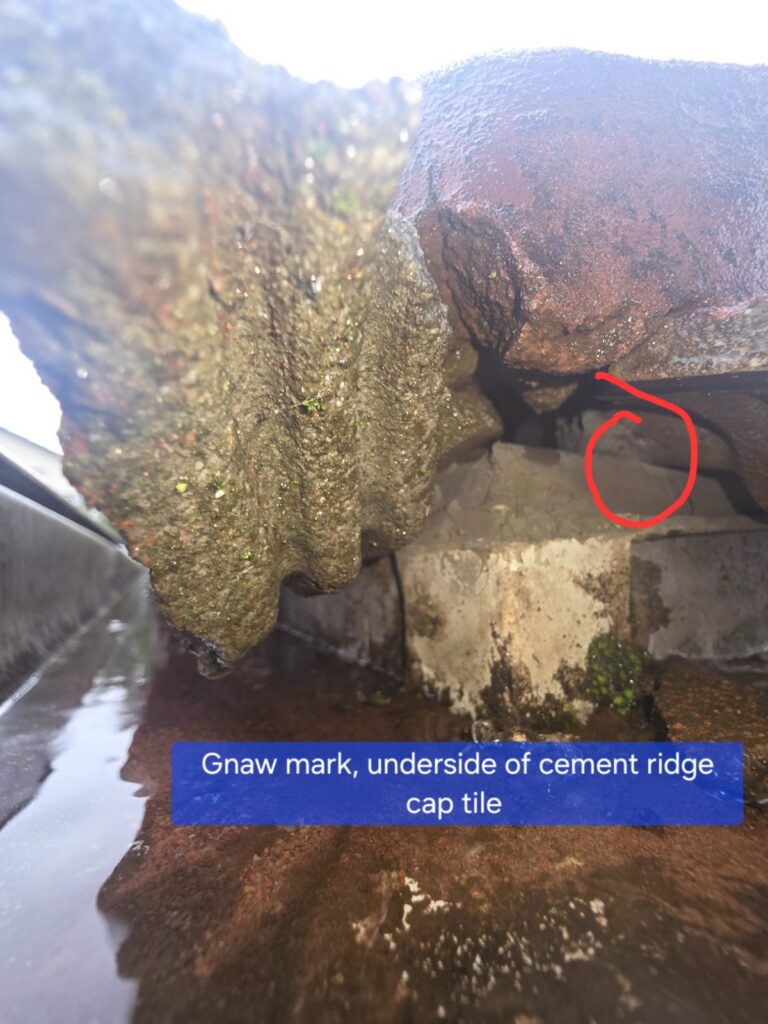
Chewed timber at the entry: pale, rough edges mean recent activity.
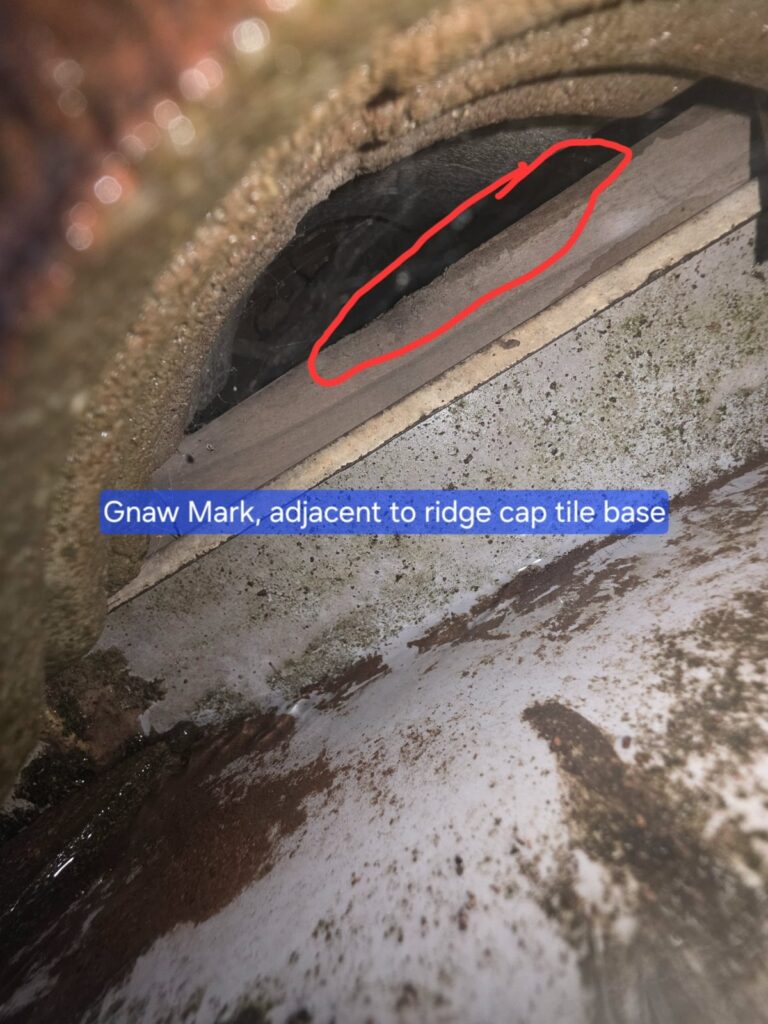
Close-up of the gnawing. Rats keep chewing to keep the gap open.
The most common entry points
1. Broken ridge caps and crumbling bedding
Ridge caps sit along the top of a tiled roof on a bed of mortar. Over the years the mortar cracks and falls away, leaving a long slot under the cap. It’s the most common rat entry point we find in Melbourne.
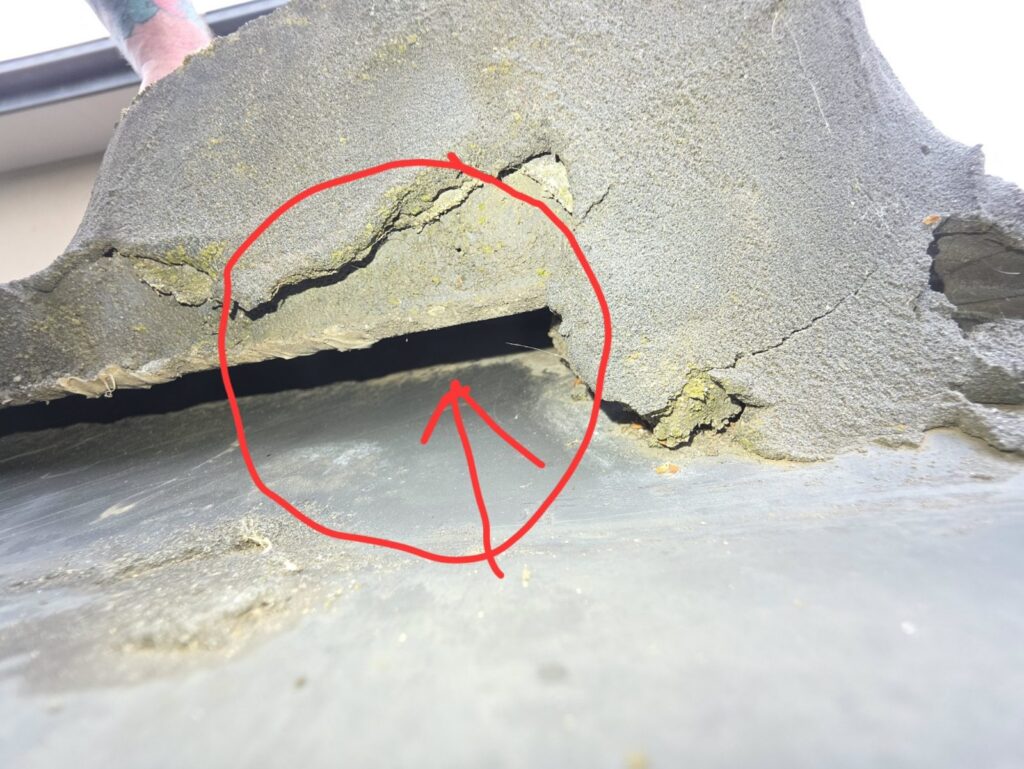
Crumbled bedding under the ridge cap leaves a long open slot.
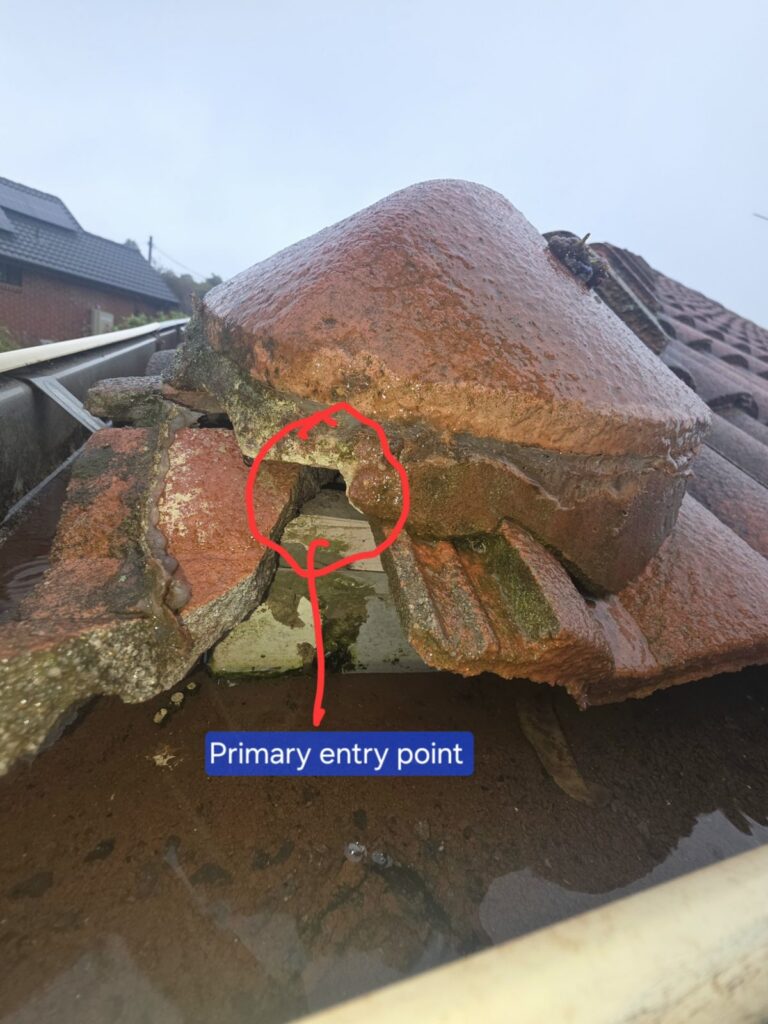
Another ridge cap with the bedding gone. A rat needs a gap only about 2 cm wide.
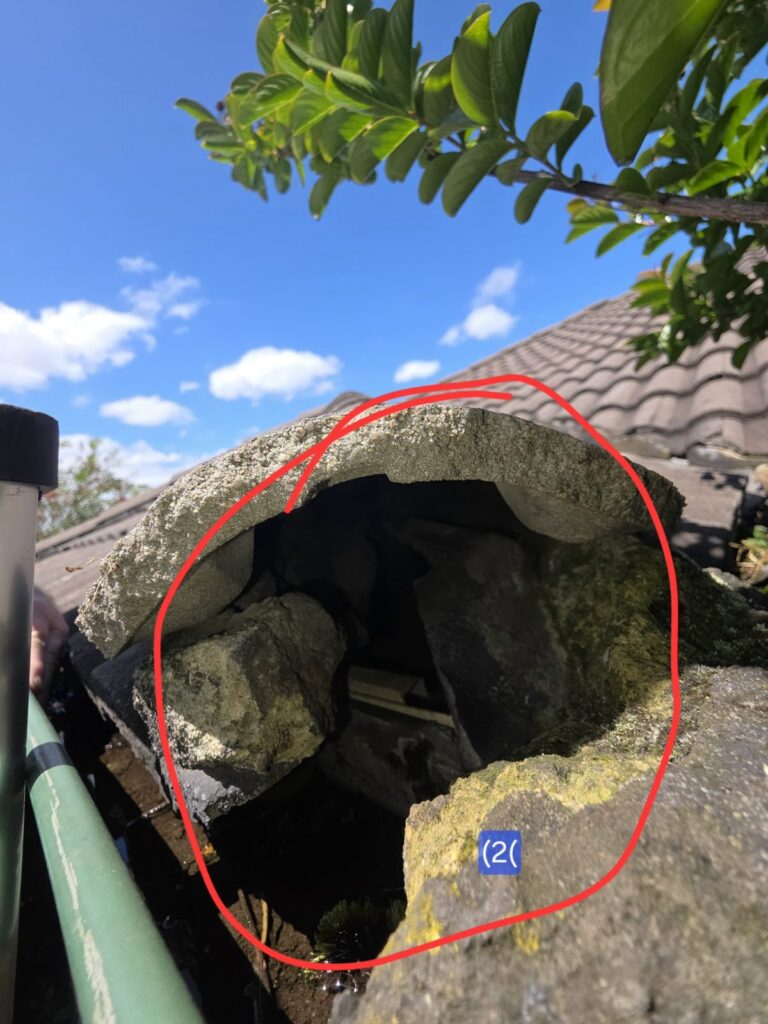
Bedding gone from under a ridge cap: an open run into the roof.
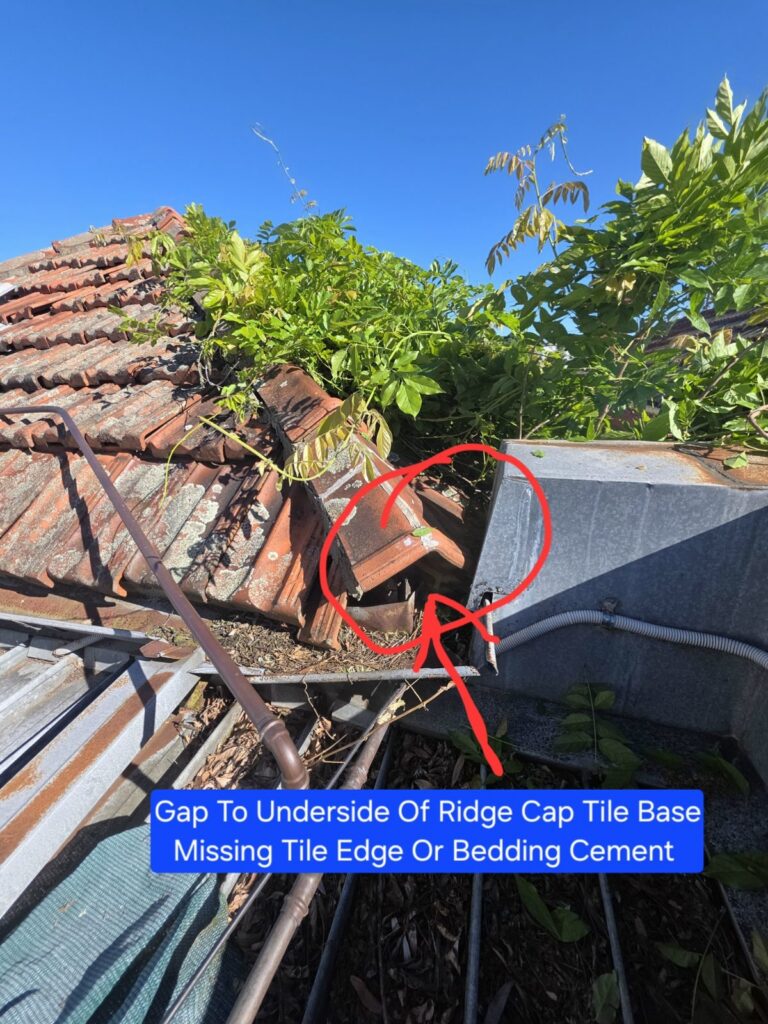
Another ridge cap gap we found on a roof inspection.
2. Gaps under tiles and flashings
Where tiles meet metal flashings, valleys or walls, the tiles often don’t sit flat. The gap underneath leads straight into the roof.
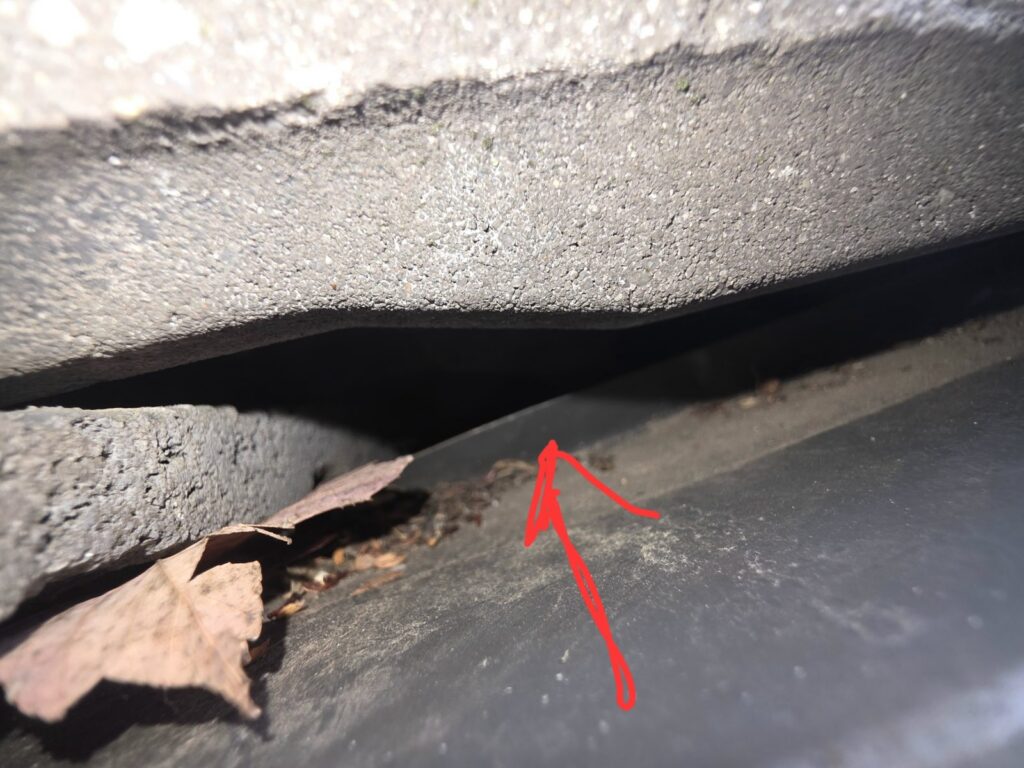
A tile lifted off the flashing, with leaves packed into the gap.
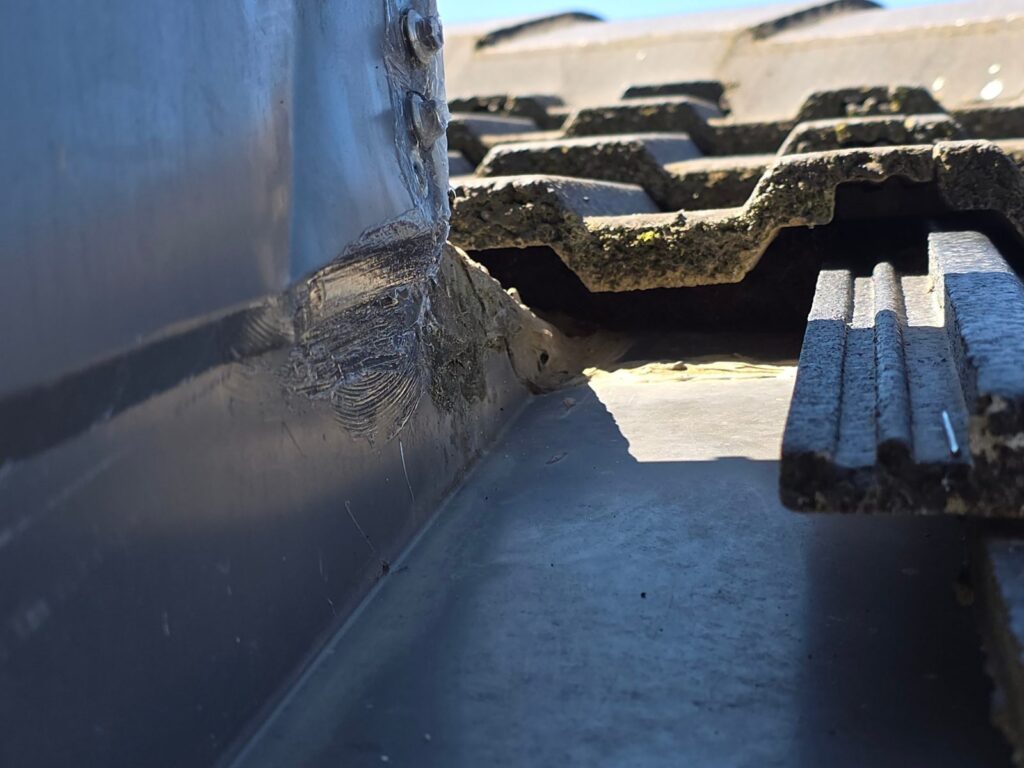
Where the tiles meet the flashing, with nest material showing in the gap.
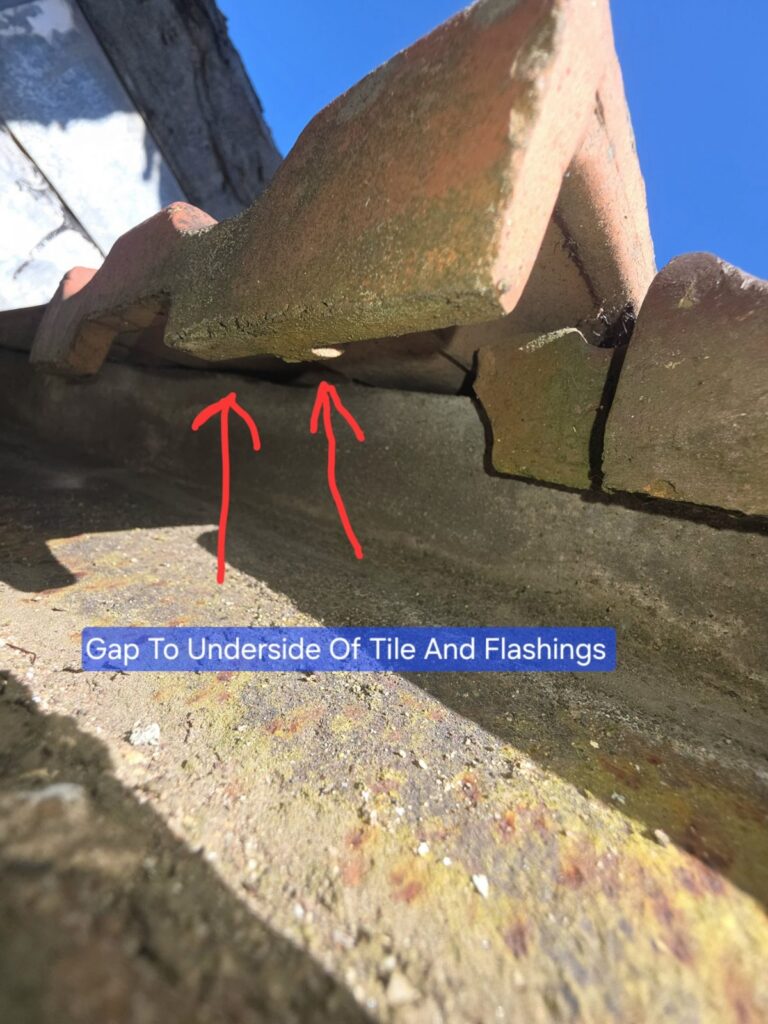
A lifted tile leaves a gap straight into the roof space.
3. Chewed flashing tape
Some roofs use flexible tape to seal joints. Rats chew straight through it.
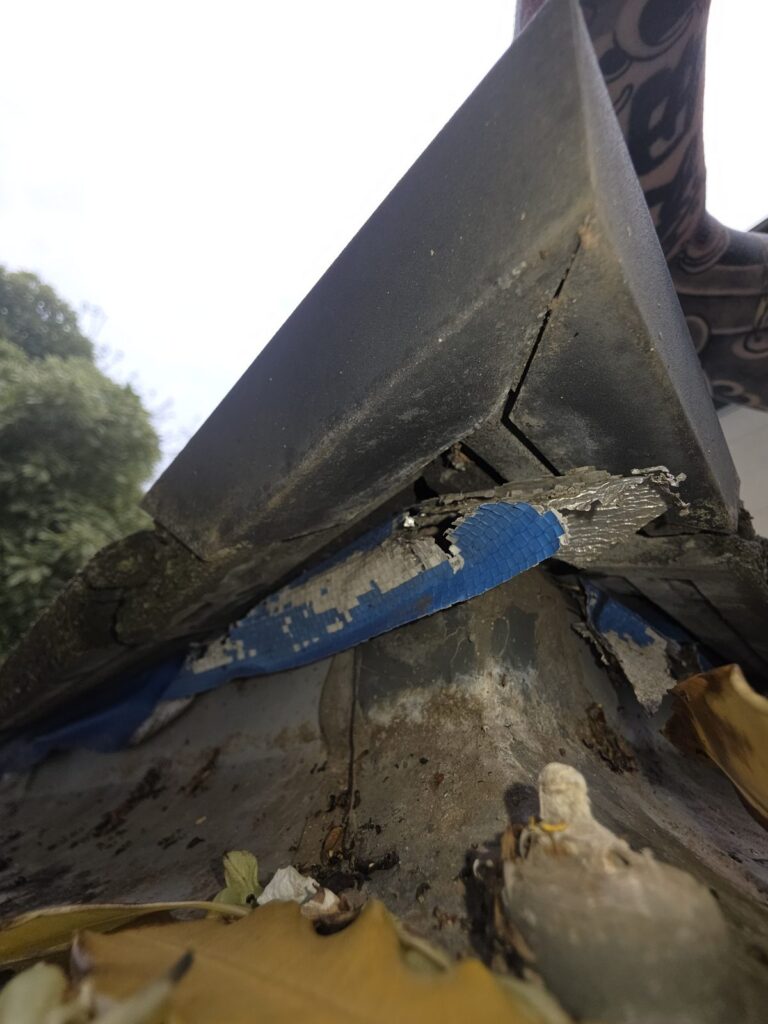
Flashing tape chewed and shredded, leaving a hole into the roof.
4. Box gutters, parapets and gutter-to-wall gaps
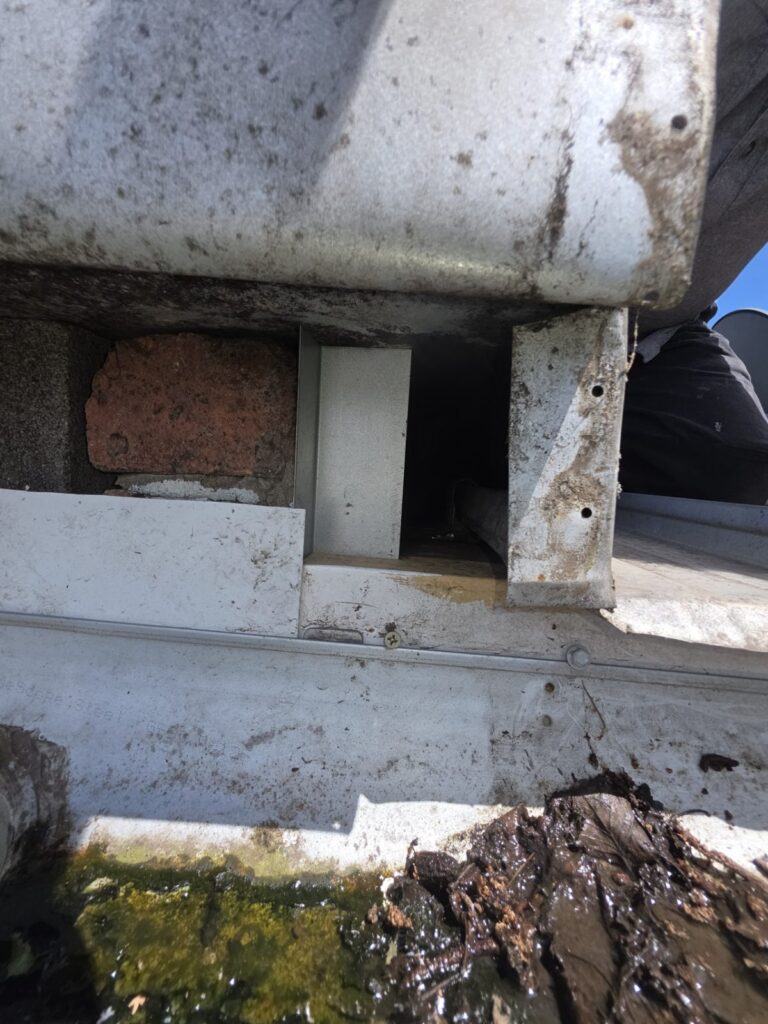
Gaps at parapet cappings and box gutters are hard to see from the ground.
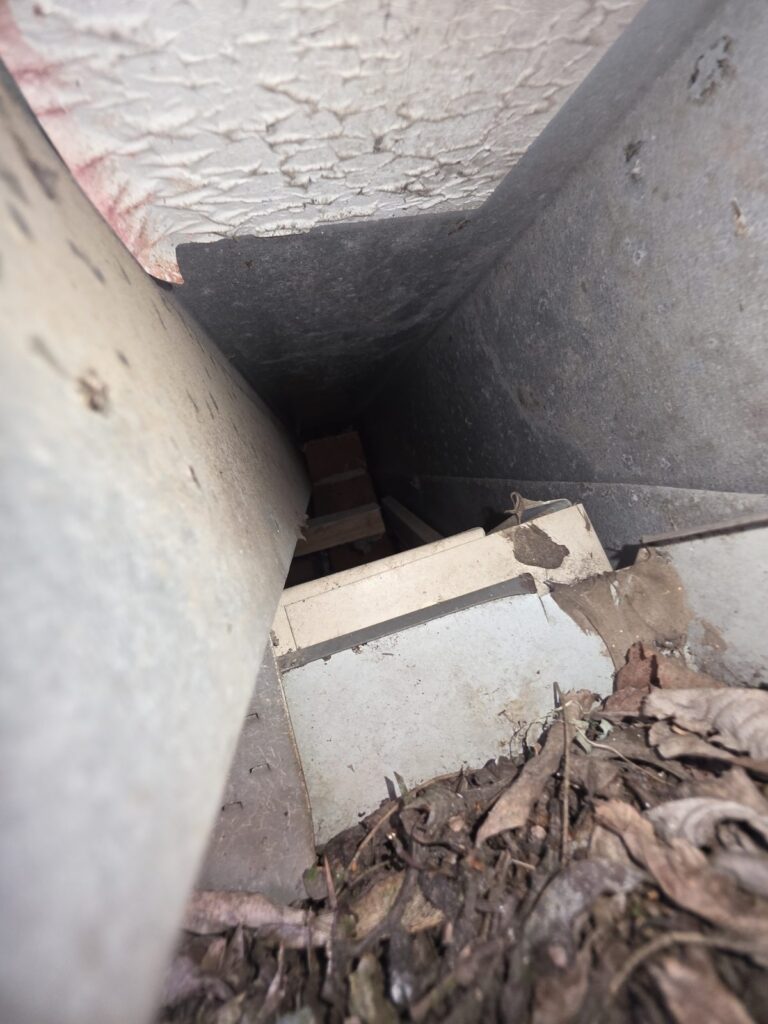
Behind the gutter: a clear drop straight down into the wall cavity.
5. Metal roofs and flashing junctions
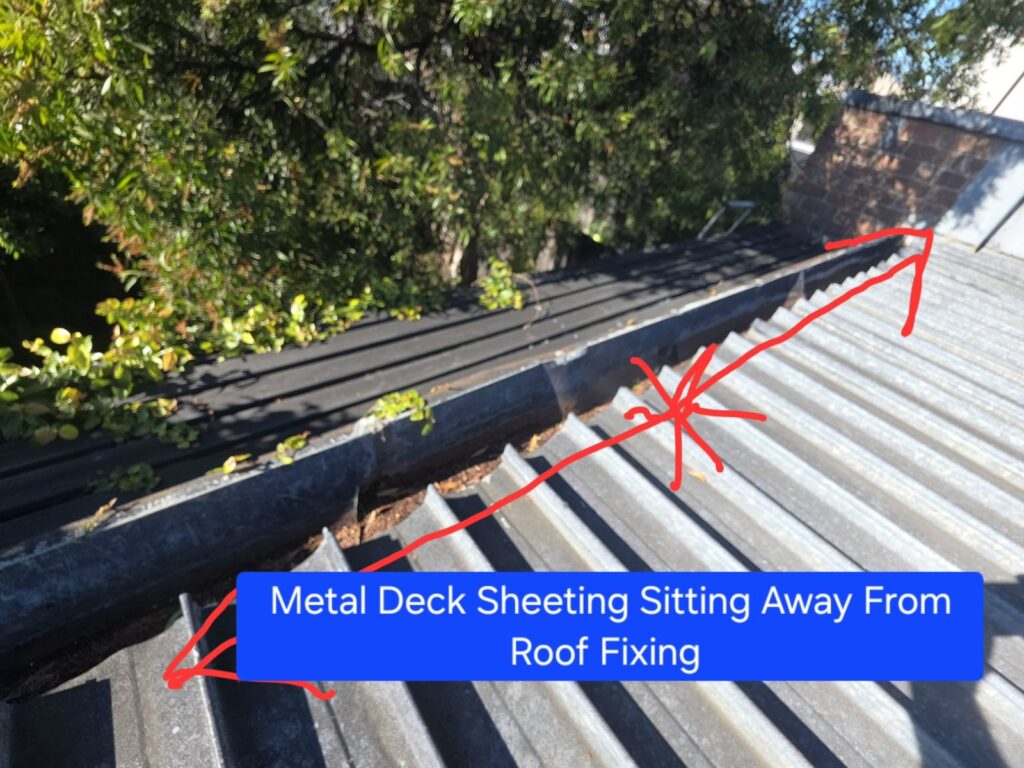
Metal sheeting lifted off its fixings.
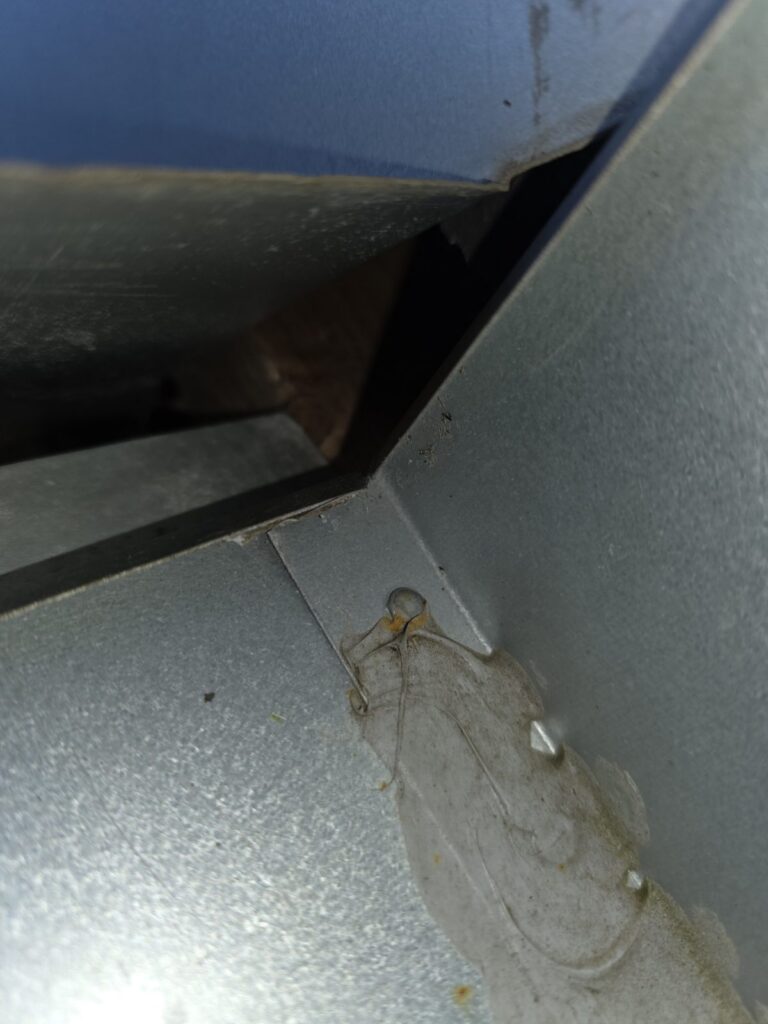
Old sealant has failed at this flashing junction, leaving an open slot.
6. Gaps hidden under overgrowth
Trees and creepers touching the roof give rats a ladder, and hide the gaps they use.
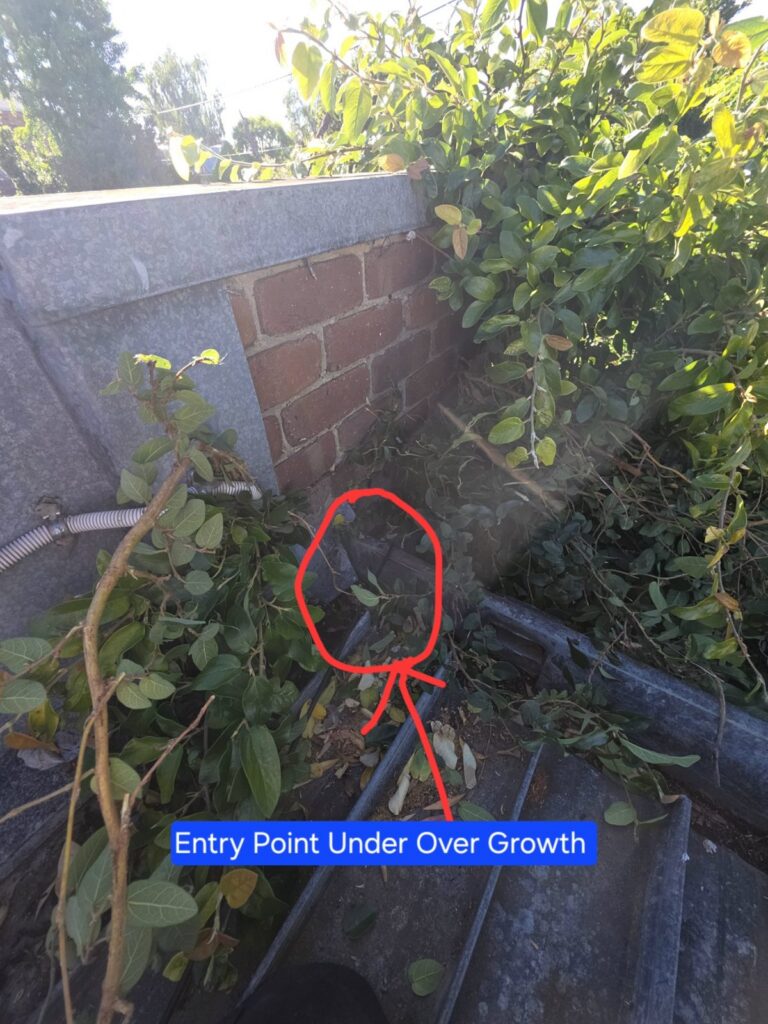
Overgrowth over the roof edge: the gap is underneath.
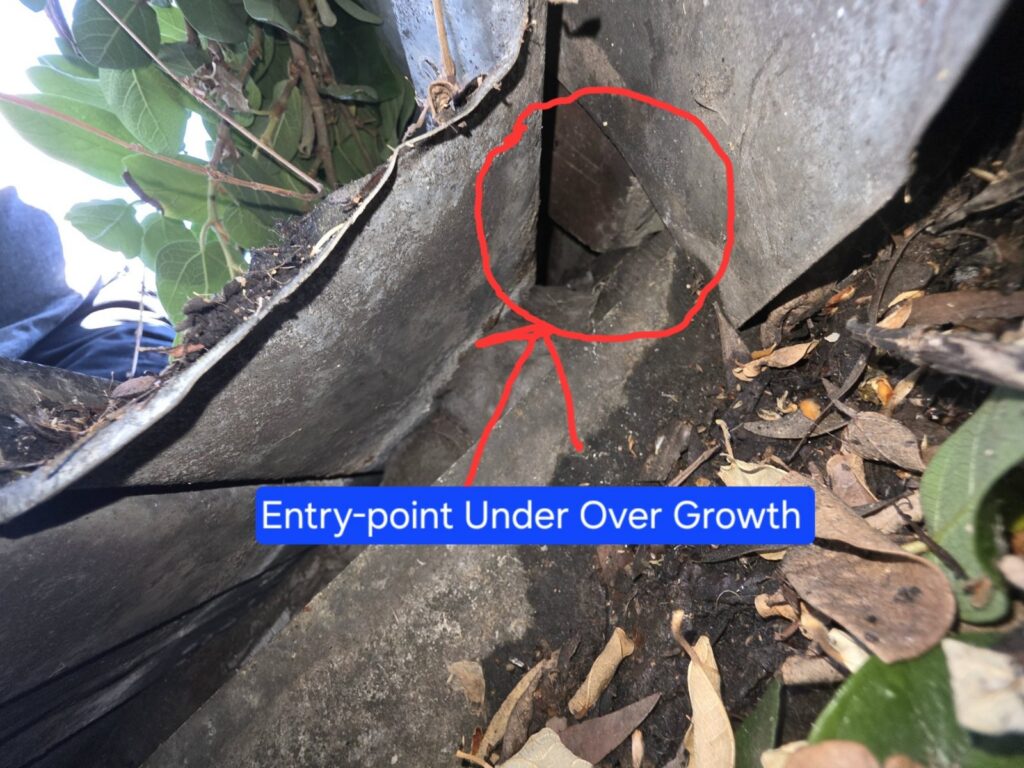
The same spot after cutting back, with the gap exposed.
7. Gaps at ground level
Rats don’t only come in through the roof. A missing brick or broken vent gives them the subfloor and the wall cavities.
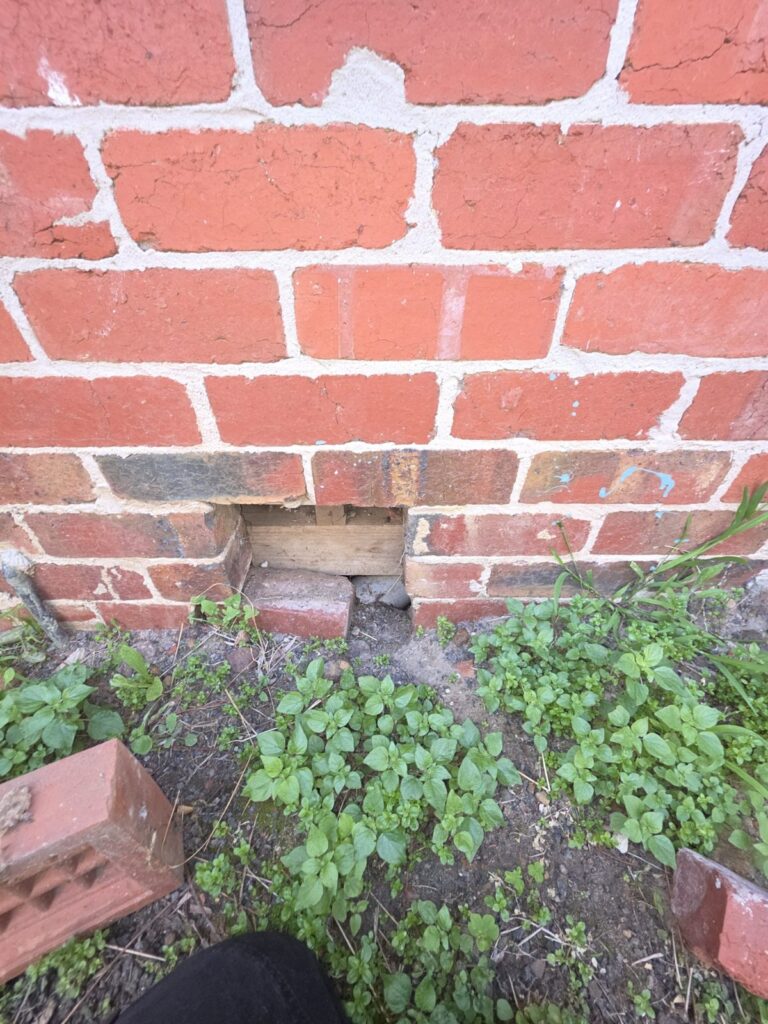
A missing brick at ground level leaves the subfloor wide open.
How we block them: before and after
We block entry points with metal, cut to fit and sealed in place. Foam, tape and steel wool don’t last, because rats chew through them. Blocking is quoted separately after we inspect the roof, because every roof is different. Rat entry points are blocked once there’s no further activity, or at the latest 14 days after the initial treatment. Once it’s done, the rats are removed and the way back in is shut.
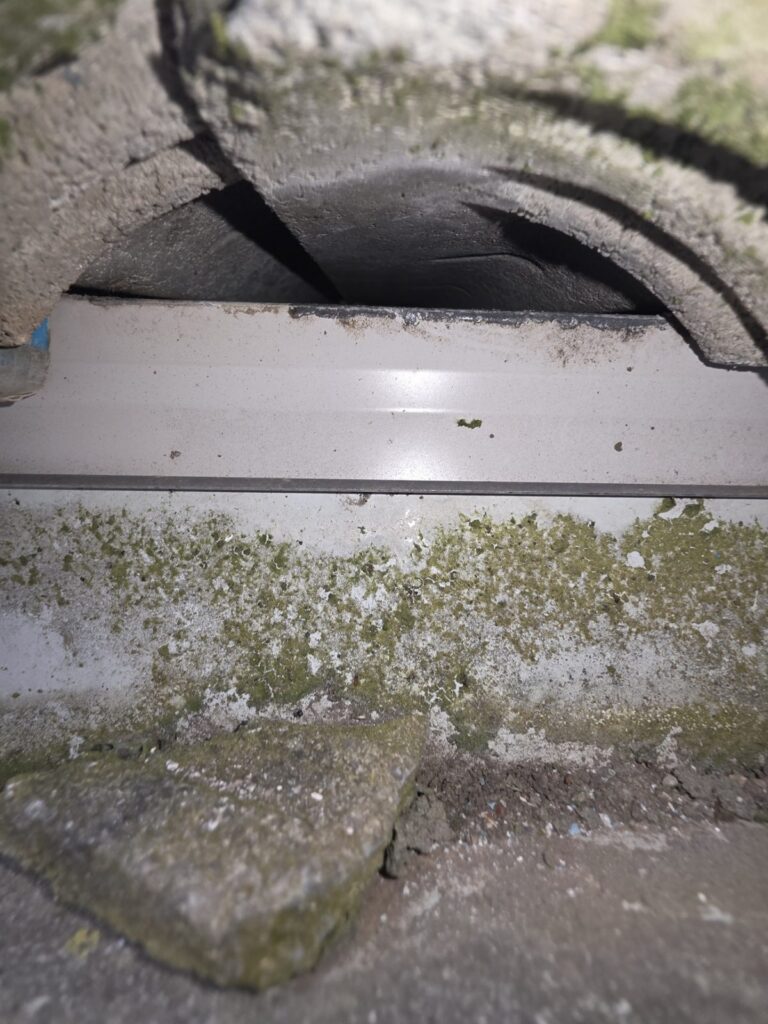
Before
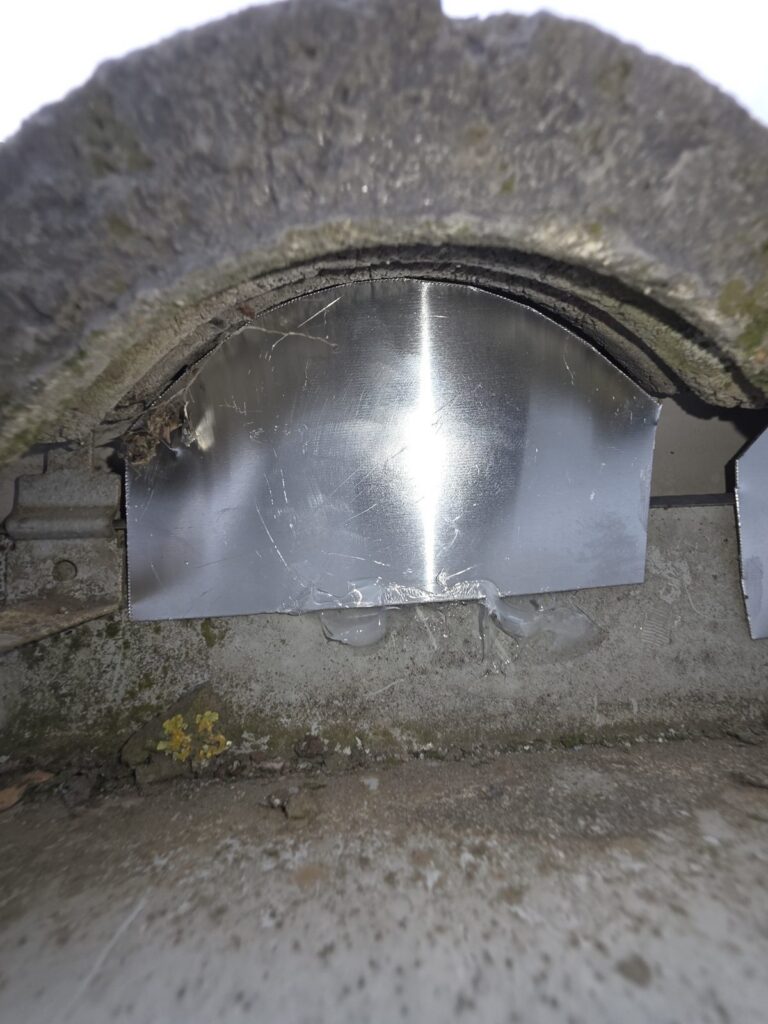
After
Open ridge cap end, then sealed with a metal plate cut to the curve of the cap.
Before
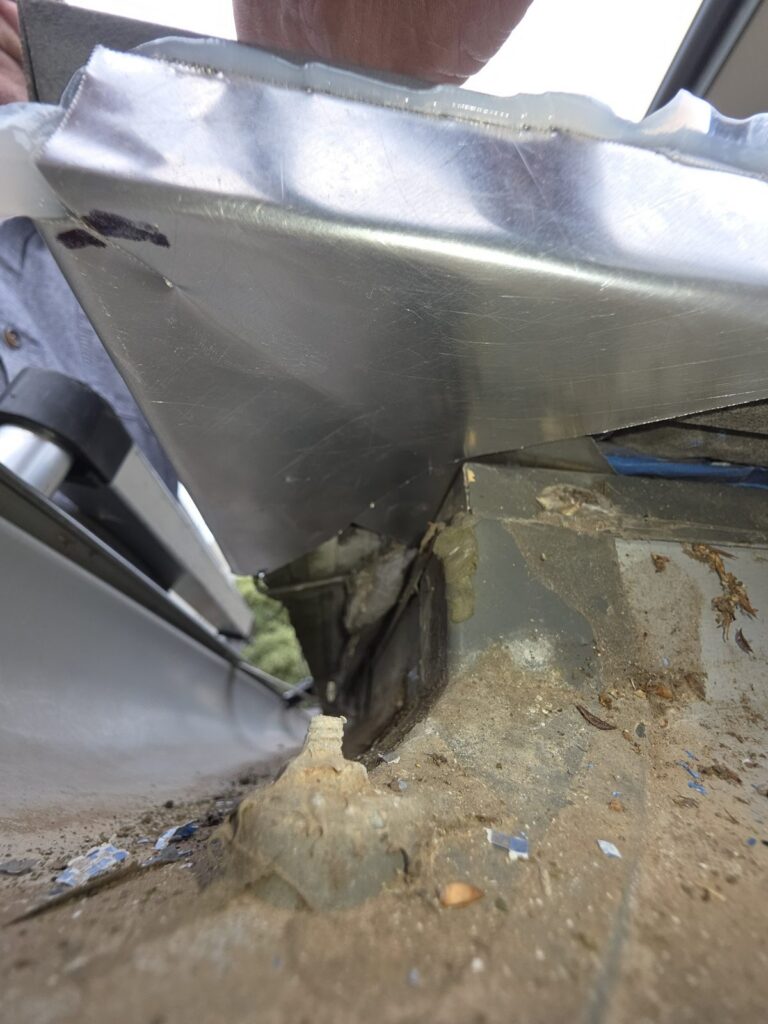
After
Chewed tape replaced with custom-folded metal flashing. Tape can be chewed; metal can’t.
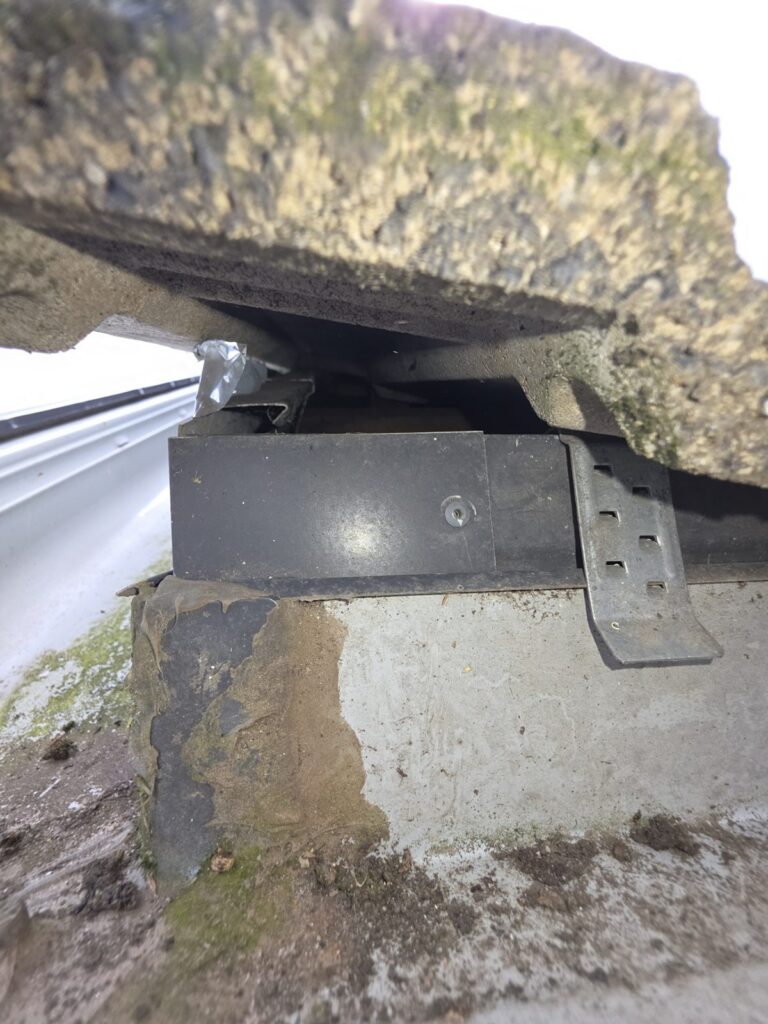
Before
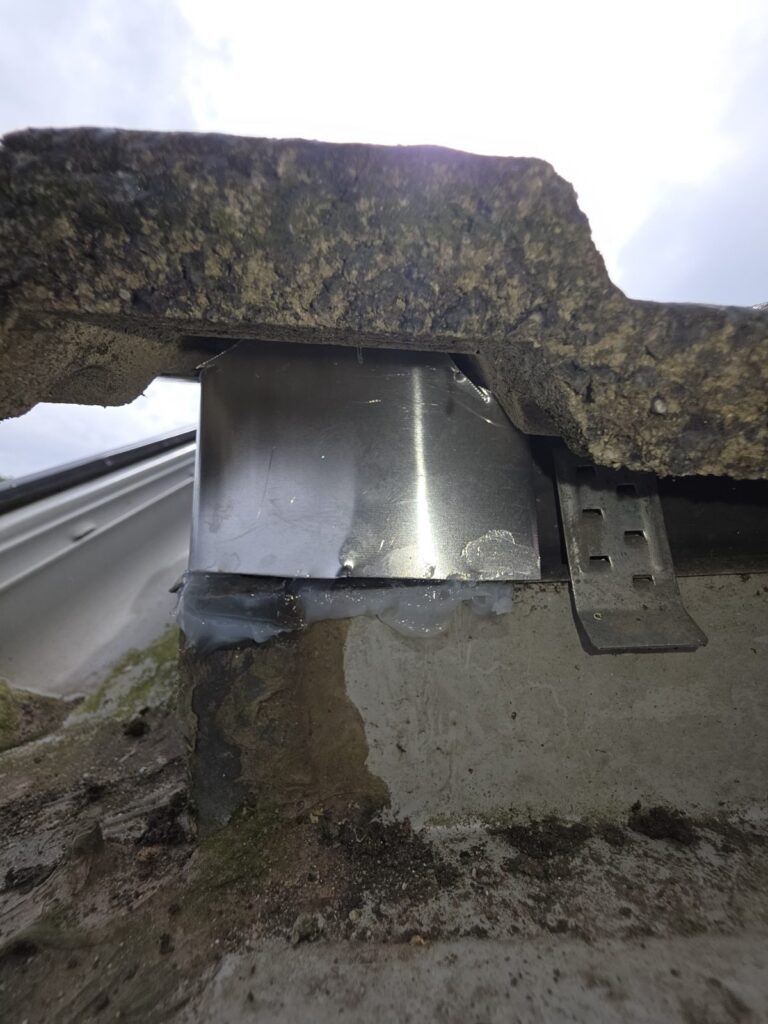
After
Entry gap before and after blocking.
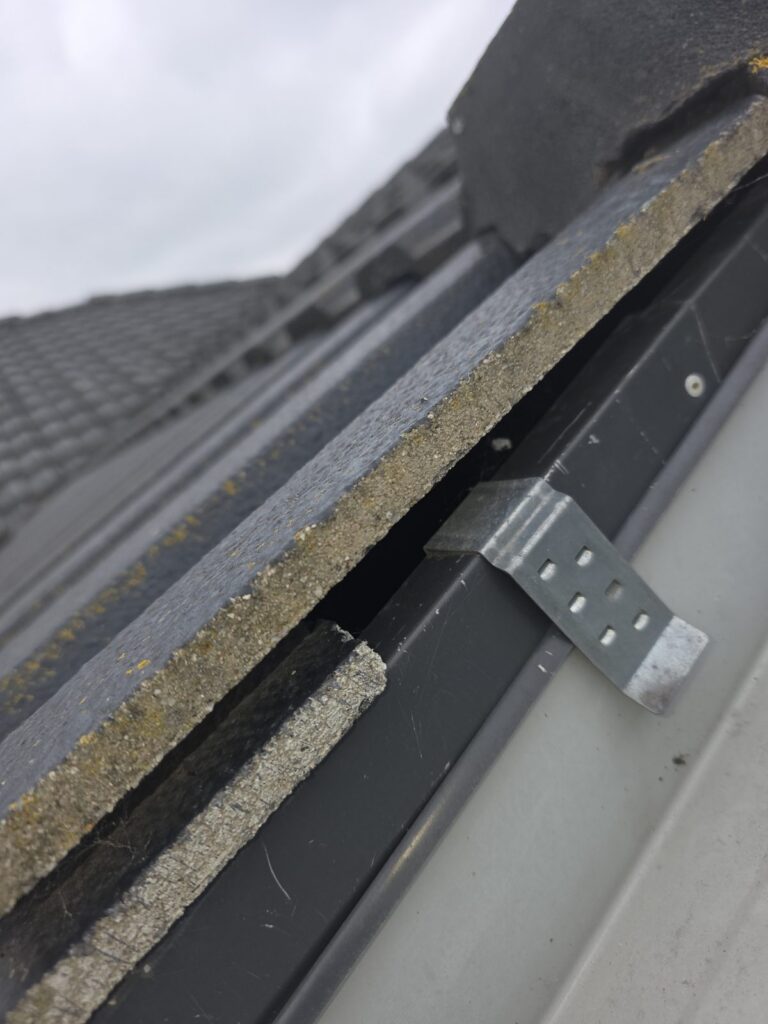
Before
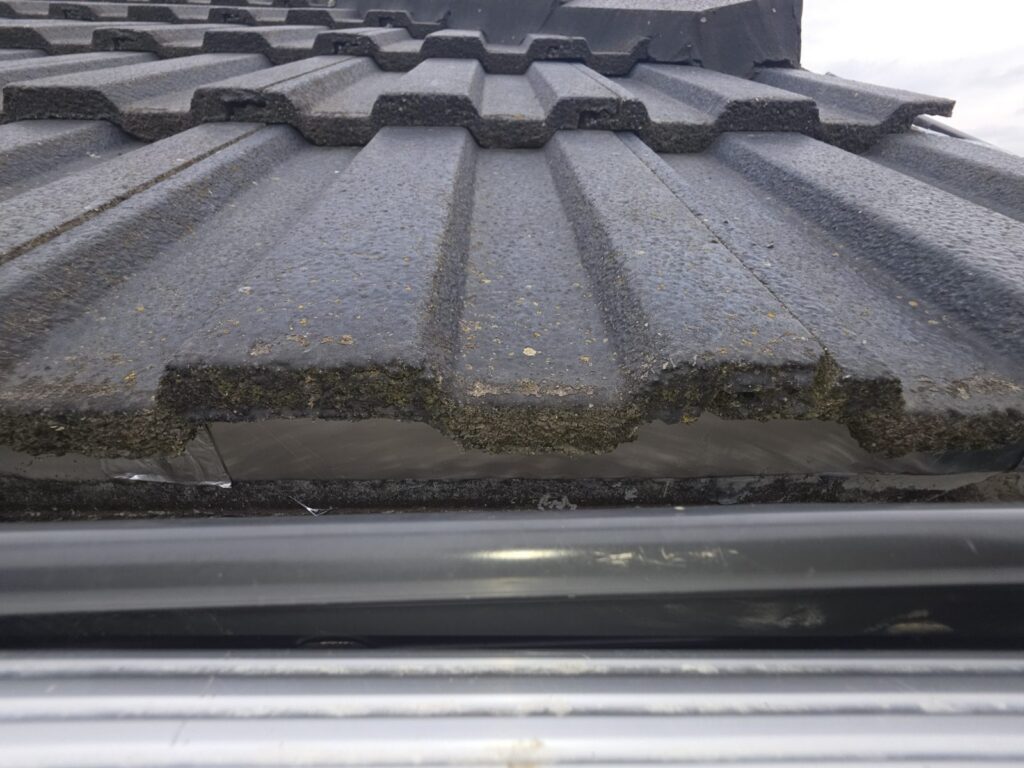
After
Gap along the gutter line, then sealed with metal.
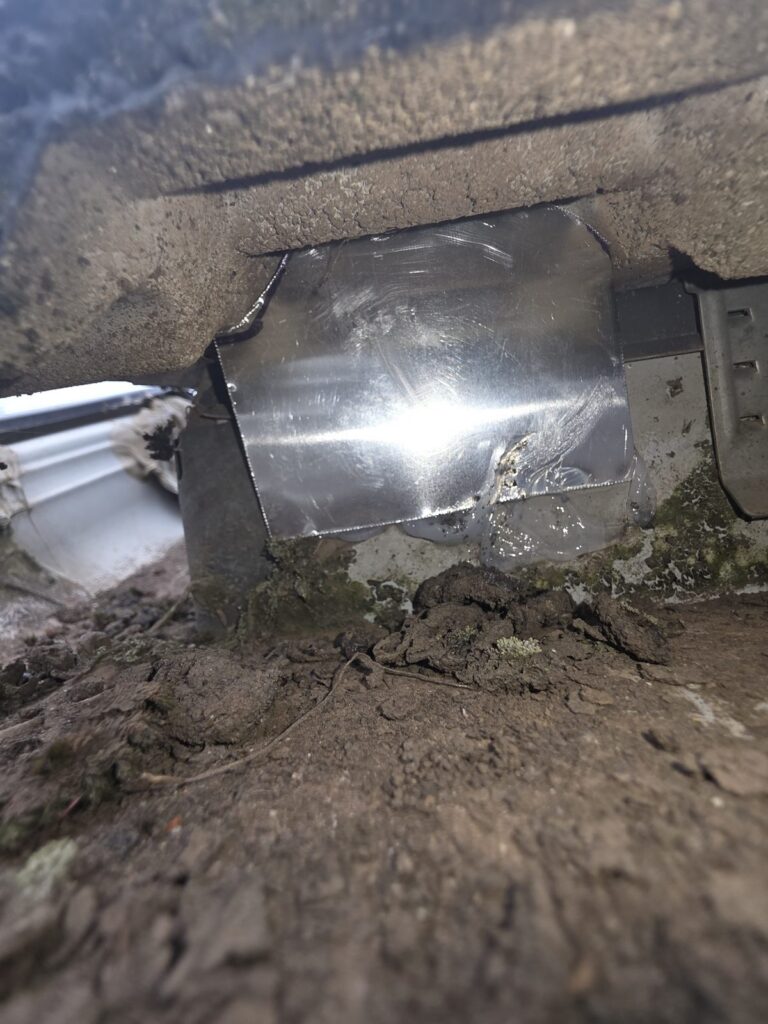
Finished metal blocking on the 13 November job.
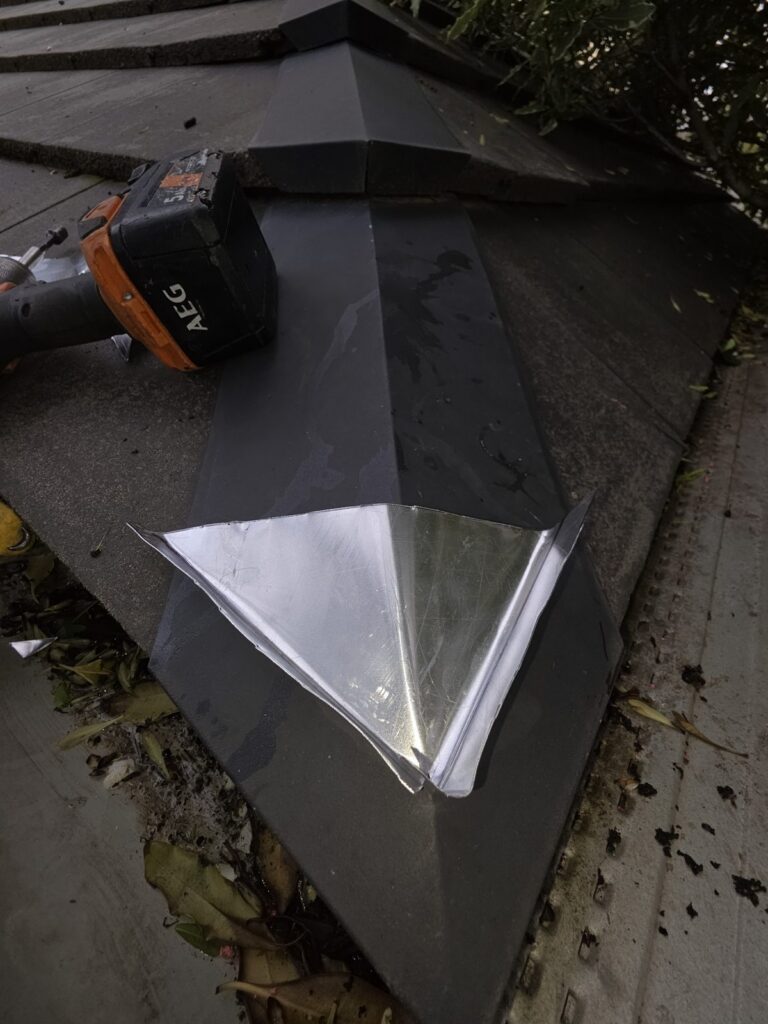
A metal ridge end closed off with a folded end cap.
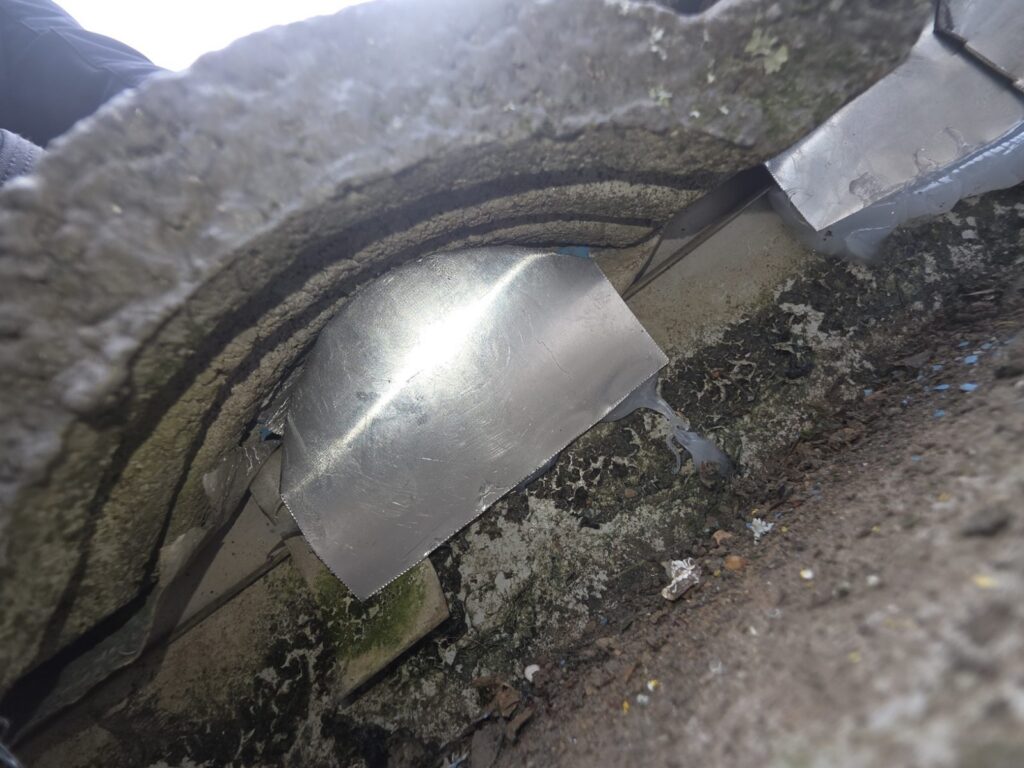
Plates fitted under each ridge cap end and sealed.
Our guarantee
We remove the rats, find every entry point and can block them for you (quoted separately). Rat treatment comes with a 5-year guarantee once the recommended entry points are blocked, or a Lifetime guarantee when Zeropest completes the proofing. All subject to our guarantee terms.
See our rat entry point blocking service or rat removal in Melbourne, or call 1800 38 66 55 (Mon–Sat 7am–11pm, Sun 9am–5pm).
Frequently asked questions
How small a gap can a rat get through?
About 2 cm. If you can fit your thumb into a gap, a rat can get through it.
Should I block the gaps myself or get Zeropest to do it?
We recommend letting us do it. Most rat entry points are high on the ridge, under tiles or behind gutters, and roof work is dangerous without the right gear. DIY fixes like foam, steel wool or tape usually get chewed through within weeks. We block every gap with metal, cut to fit and sealed in place (quoted separately after inspection), and when Zeropest completes the proofing you get our Lifetime guarantee (subject to terms).
Will baiting alone fix a rat problem?
Baiting removes the rats that are already inside, but new rats will keep coming in through the same gaps. Blocking the entry points is what stops it for good.
When are the entry points blocked?
Once there’s no further rat activity, or at the latest 14 days after the initial treatment. Blocking too early can trap rats inside the roof or walls.
How do I know which gap the rats are using?
Look for droppings, nest material, grease marks or debris at the opening. Our technicians check the roof void and the roof together to match the runways inside to the gaps outside.


